



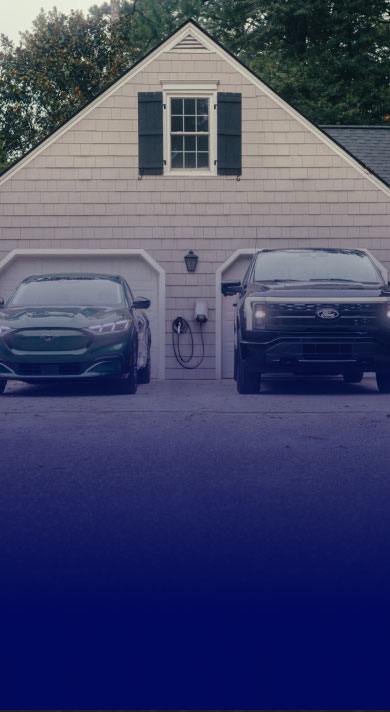
Going Electric at Price Ford of Simi Valley
Electric Vehicle Confidence From Day One The support you need—on the first day of ownership and beyond.

BlueCruise remains Consumer Reports top-ranked active driving assistance system for the second time in a row out of 17 systems tested, including Tesla’s Autopilot and GM’s Super Cruise, among others.*
Disclaimers
* Consumer Reports does not endorse products or services. To read the full report, visit www.ford.com/bluecruise.
** Available Feature. Equipped Ford vehicles come with either a complimentary trial period or an included duration, after which purchase of a BlueCruise subscription is required. Modem activation is required for subscription purchase and for initial activation of BlueCruise (for pre-2024-model year vehicles). See ford.com/bluecruise for details. BlueCruise is a driver-assist feature and does not replace safe driving or driver’s attention, judgment, or need to control the vehicle. Only remove hands in a Hands-Free Blue Zone. Always watch the road and be prepared to resume control. See Owner’s Manual for details and limitations.
Schedule Your Electric Vehicle Maintenance for Your Mustang Mach-E®, F-150 Lightning® or E-Transit™ at Price Ford of Simi Valley
Frequently Asked Questions
Are you thinking of buying an EV in Simi Valley, CA? At Price Ford of Simi Valley, we have electric vehicles that fit your needs. But we also know you might have questions. Our electric vehicle FAQs should help you understand a few of the ins and outs of EVs.
What kind of maintenance services are required?
How long do electric vehicle (EV) batteries last?
What is the maintenance schedule for an EV?
We have recommended maintenance intervals for various parts and component systems based upon engineering testing. For your scheduled maintenance service intervals, visit https://www.ford.com/support/maintenance-schedule
Every 12 Months or 10,000 miles
- Rotate the tires, inspect for tire wear and measure the tread depth.
- Perform a multi-point inspection (recommended).
- Inspect the brake pads, shoes, rotors, drums, brake linings, hoses and the parking brake.
- Inspect the cooling system coolant level, coolant strength, and the cooling system hoses.
- Inspect the halfshaft boots.
- Inspect the steering linkage, ball joints, suspension and tie-rod ends.
- Inspect the wheels and related components for abnormal noise, wear, looseness or drag.
Other Items
- Change Brake Fluid (Every 3 Years)
- Rotate the tires, inspect for tire wear and measure the tread depth. (Every 12 Months or 10,000 miles)
- Perform a multi-point inspection (recommended). (Every 12 Months or 10,000 miles)
- Replace the cabin air filter (Every 20,000 miles)
- Change yellow battery coolant (Every 200,000 miles)
What is the difference between a hybrid vehicle and an EV?
Is owning an EV cheaper than owning a gas-powered vehicle?
Can an EV tow a trailer?
Where can I charge my EV?
Besides your home, many parking areas and work environments. Also the government provides a map of all electric vehicle charging stations. You can search for locations in your area or along your route. Map out your route before you leave.
Do EVs have a transmission?
Do EV batteries get recycled?
Can I Install the Ford Connected Charge Station Myself?
A Ford Connected Charge Station can be ordered from your Ford Dealer or FordParts.com. We highly recommend you hire a licensed electrician to do the installation as it involves a high degree of skill. Please provide these home installation tips to a licensed electrician to support an accurate installation quote.
Where Can I Find the FordPass® App?
*FordPass App, compatible with select smartphone platforms, is available via a download. Message and data rates may apply.
App Store is a service mark of Apple Inc. Google Play is a trademark of Google LLC.
How Can I Make Sure I Stay Charged and Moving When Planning a Road Trip?
What Is the Optimal State of Charge and Impact on an EV Battery Life?
Can Weather Affect Battery Performance?
Yes, temperatures can have an affect on battery performance.
Tips for improving cold-weather range:
- Park in a garage whenever possible.
- Precondition the vehicle using the onboard technology to preheat its high-voltage battery while still plugged into the power source.
- Use heated accessories such as a heated steering wheel or heated seats, which are more power efficient than the conventional climate control system, to heat the whole cabin (when possible).
- When charging, ensure the HVAC system is turned OFF. (When preconditioning has been selected, the vehicle’s onboard technology, such as SYNC 4A, will automatically turn the HVAC system back ON.)
- If the vehicle is snow covered, brush all the snow off to eliminate extra weight and reduce aerodynamic drag.
Tips for improving hot-weather range:
- Park in a garage or under shade whenever possible.
- Precondition the vehicle using the vehicle’s onboard technology to precool the vehicle while it’s plugged into the power source, saving battery charge for the road.
- Select a moderate air conditioning setting because this feature requires more battery power to cool the cabin.
